
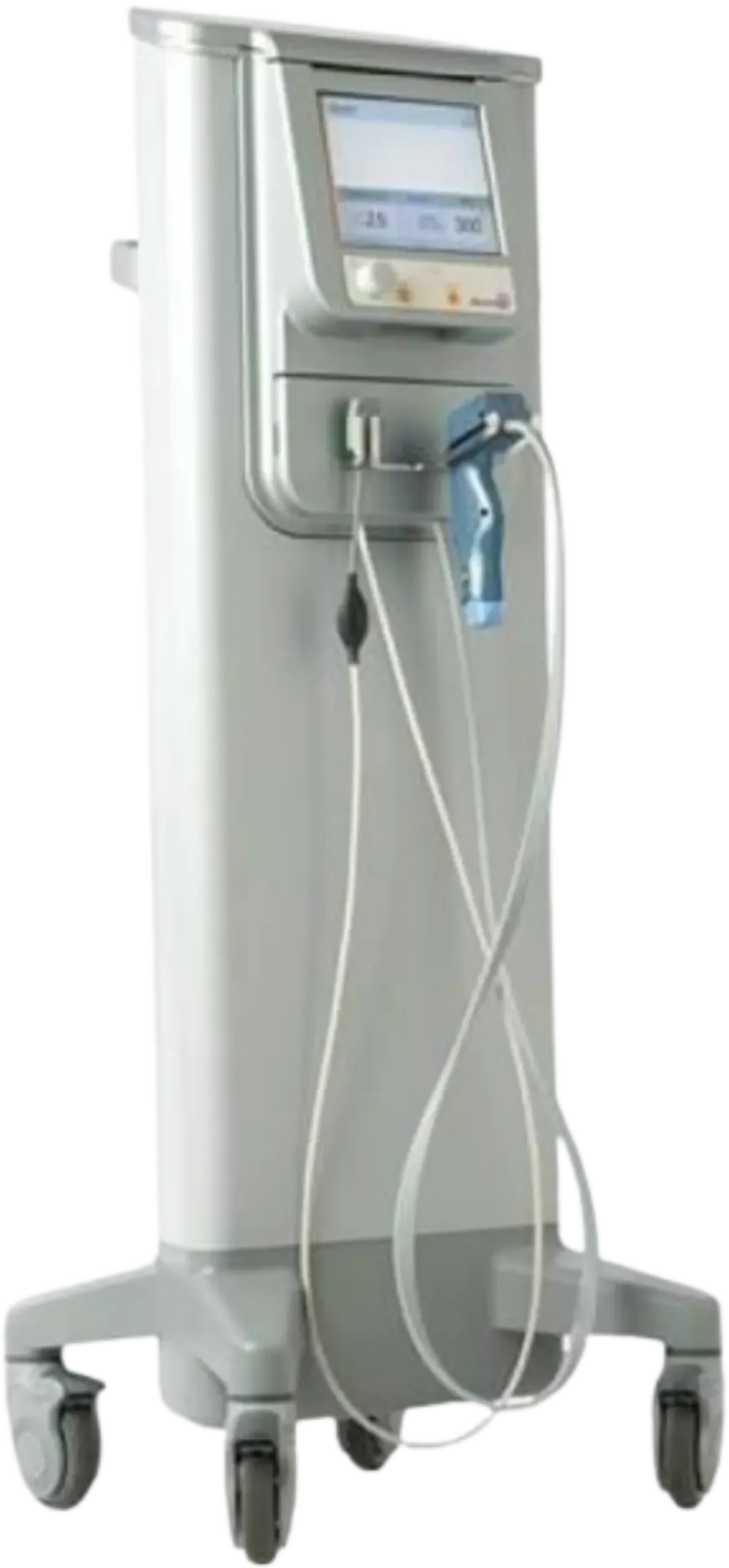
Thermage in Korea before and after photos should show a slow firming of the skin over several months, not a new face shape after one visit. Thermage FLX is a monopolar radiofrequency (RF) device that heats the dermis to roughly 3 mm, briefly tightening collagen and then prompting new collagen to form. Swelling in the first week can make early firmness look stronger than it is. The change that lasts tends to build between month two and month six. Results vary from person to person, and a fair comparison needs matching light, angle, expression and a clear date on each image.
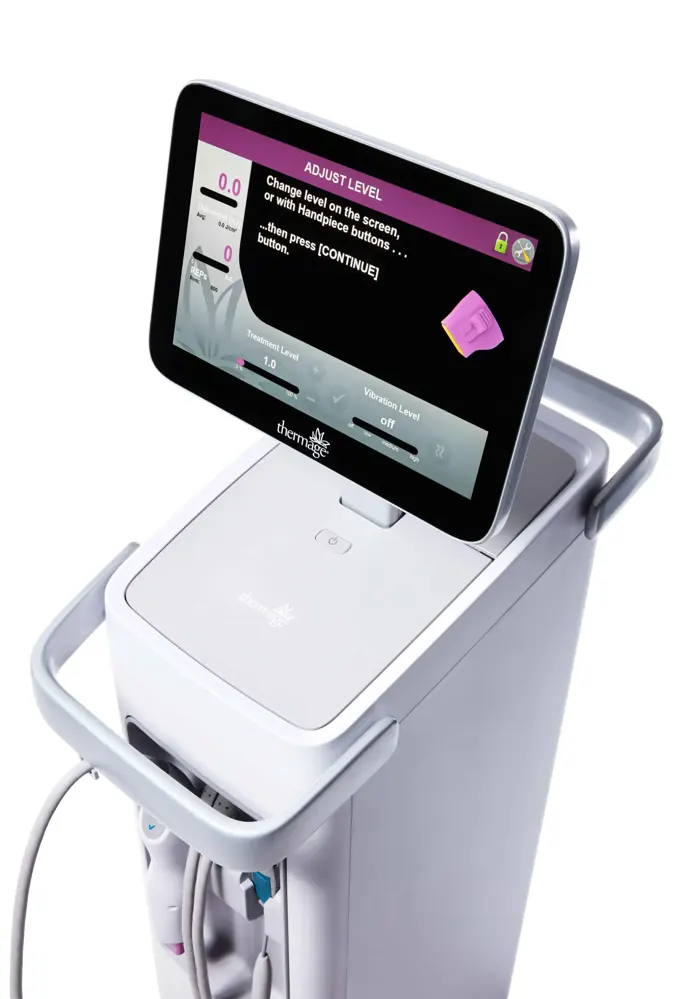 Solta Medical · Thermage FLX
Guide
Three moments when the face changes after monopolar RF
Radiofrequency acts on collagen in two stages. First comes a quick contraction of collagen fibers, visible while the doctor is still working. Then comes remodeling, as the skin lays down new collagen over the following months. A photo from each stage records something different, so the date matters as much as the image.
A 2007 survey in Dermatologic Surgery by Dover, Zelickson and a 14-physician panel pooled 5,700 monopolar RF facial treatments. In that survey, lower energy with several passes and a stop once tightening was visible gave immediate tightening in 87% of patients and lasting tightening at six months in 92%, against 26% and 54% in the Dover survey's older single-pass, high-energy group. It reflects physician experience rather than a controlled trial.
| Time point | What may appear | What a photo can fairly show |
|---|---|---|
| Treatment day | Mild firmness, warmth, pink skin | End-point tightening, mixed with flushing |
| Days 1 to 7 | Light swelling, tenderness | A fuller look that fades, not the result |
| Weeks 2 to 6 | Swelling gone, little visible change | Close to baseline for many people |
| Months 2 to 6 | Gradual firming as new collagen forms | The change worth comparing |
Guide
Why a week-one photo can flatter or disappoint
Mild swelling after RF fills fine lines and smooths the jaw edge for a few days, so a picture taken then can flatter the final outcome. Once the fluid settles, some people assume the session failed, although remodeling has barely started.
The reverse happens too: a tired day-two travel photo beside a rested baseline may show nothing.
Guide
Checks that make a photo pair worth trusting
RF changes are subtle, so small differences in how a photo is taken can hide or invent them. Look for these points in any pair.
- Same light source and direction: overhead light deepens folds, front light flattens them.
- Same head angle, since a slight chin lift tightens any jawline.
- Same relaxed expression, no smile, no clenched jaw.
- Both dates shown, with a gap long enough for remodeling.
- No makeup, filters or retouching, and stable body weight.
- Other treatments in the same period stated.
- The tip type and treated areas noted.
Guide
Side effects that can show up in an after photo
Common effects are short-lived: redness for a few hours, mild swelling for a few days and tenderness along the jaw or cheeks. Faint grid-like marks where the tip was placed usually fade within days.
Rare problems include blisters, small burns and, very rarely, a slight dent where fat under the skin reacted to heat. A 2026 cohort study in the Journal of Cosmetic Dermatology by Wang and colleagues reviewed 13 cases in which a monopolar RF tip membrane ruptured during treatment at one clinic: all 8 ruptures spotted by eye led to burns, while none of the 5 found with polarized dermoscopy did. Asking how the tip is inspected is a reasonable safety question.
Pregnancy, a pacemaker or other implanted device, metal implants in the area and active skin infection are reasons to postpone or avoid treatment.
Guide
Recording your own result after flying home
Clinic galleries show other people, so your own photos are a fairer test. Before numbing cream goes on, take front, both 45-degree and both profile shots under the same window or lamp you will use at home.
Repeat the set at month three and month six, at a similar time of day, hair pulled back, and compare on a screen rather than in a mirror. A small difference is typical of RF tightening, and a doctor can review the photos before any repeat session.
Evidence
Research behind this page
- Results of a Survey of 5,700 Patient Monopolar Radiofrequency Facial Skin Tightening Treatments: Assessment of a Low-Energy Multiple-Pass Technique Leading to a Clinical End Point AlgorithmDermatologic Surgery · 2007 · doi:10.1111/j.1524-4725.2007.33191.x
Across 5,700 surveyed treatments, lower-energy multiple-pass monopolar RF with visible tightening as the end point gave more tightening and less reported pain than single high-energy passes.
- Early Detection of Monopolar Radiofrequency Tip Rupture Using Polarized Dermoscopy: A Preventive Approach Against Treatment‐Related BurnsJournal of Cosmetic Dermatology · 2026 · doi:10.1111/jocd.70678
In 13 tip membrane ruptures, naked-eye detection was followed by burns in every case, while dermoscopy-detected ruptures caused none.
FAQ
Questions about Thermage in Gangnam
Why did my skin look tighter right after the session and then lose it?
That early firmness comes from collagen contracting under heat and from mild swelling, and both settle within days to a couple of weeks. The longer-lasting change depends on new collagen, which forms slowly over the following months. Many people feel the face is back to baseline around week three. Compare photos again at month three before deciding how well the session worked.
Can one RF session visibly change a jawline?
One session can soften mild laxity along the jaw, but it does not reshape bone, remove a double chin or replace a surgical lift. Monopolar RF heats the dermis, so the change is in skin firmness rather than contour. People with thin skin and early sagging tend to see more than those with heavy jowls. Where laxity is marked, a doctor may suggest another approach.
Do ring lights and phone beauty modes distort lifting photos?
Yes, front-facing ring lights flatten shadows and beauty modes smooth texture, which makes any face look firmer, while overhead or side light deepens folds. Because RF changes are small, these effects can easily be larger than the treatment itself. Use the same light, camera and settings for every photo, with filters off. Shoot in the same room at a similar time of day as well.
What do small red squares on the cheeks after treatment mean?
Faint square or grid-shaped marks usually match where the treatment tip touched the skin and tend to fade within hours to a few days. Blisters, crusting or a mark that darkens or hurts more over time are different and should be shown to the treating doctor quickly. Keep a dated photo of any mark, since it helps the doctor judge it later.
Should the eye area be judged separately from the lower face?
Yes, because the eye tip is a separate attachment used on thinner skin around the upper and lower lids. Changes there are usually seen as slightly less crepey skin rather than a lifted brow. Photograph the eyes in a close-up with the eyes open and gently closed. Mixing them into a full-face shot makes the small change almost impossible to see.
When is it fair to decide whether the treatment worked?
Around month six is a fair point to judge, since most collagen remodeling after monopolar RF has had time to show by then. Before that, photos mostly capture swelling or lighting. If the six-month pair shows little difference, discuss it with a doctor before booking again. Age, sun exposure and weight change keep moving the face in the meantime, so they belong in the comparison.